

Inside the CLARE Capacity Strengthening (CS) Hub
What Role Do Learning & Research Play in Building a More Climate-Resilient World?
What does it take to conduct impactful research for climate adaptation and resilience? What are the pathways that lead to meaningful climate action or societal change, and how can they be informed by the latest adaptation research? What makes tertiary education institutions shape up the next generation of climate adaptation researchers and professionals?
These are some of the questions we are addressing in our work of the CLARE Capacity Strengthening Hub. The Hub is part of the Climate Adaptation and Resilience (CLARE) Programme and is co-hosted by PlanAdapt and the African Centre for Technology Studies (ACTS). The Hub supports researchers, practitioners, and decision-makers across Africa and Asia to enhance the quality, relevance, and impact of adaptation research, while fostering equity, inclusion, and collaborative learning across the CLARE portfolio.
Our Approach: Connecting Enablers of Change beyond Knowledge Generation
The evidence is clear: adaptation action is urgently needed. As of 2022, approximately 3.3 to 3.6 billion people live in contexts that are highly vulnerable to climate change (2022, IPCC). But knowledge and information do not automatically lead to change: politics, norms, human behaviour, financial support – many factors influence action. For us, it is clear that adaptation knowledge and evidence needs to be accessible, clear and co-designed with the end user. It requires the capabilities, relationships, and institutional conditions that allow knowledge to be transformed into action. Hence, we prioritise strengthening skills that enable researchers and co-producers of research to make an impact through influencing policies, community action, finances or innovation.
Our Philosophy: Capacity Strengthening is a Long-term Learning and Transformation Process, not an Activity

From the beginning, the Hub has approached capacity strengthening as an adaptive, long-term process that combines multiple modalities rather than treating it as a one-off activity. This approach is central to the Hub’s broader philosophy on capacity strengthening and reflects CLARE’s understanding that capacity operates at multiple interconnected levels: individual, organisational, and systemic. Strengthening one without the others rarely leads to sustained change. For this reason, the Hub designs its interventions to influence all levels simultaneously, building skills, strengthening institutions, and nurturing networks that can sustain adaptation processes far beyond individual progression and project cycles.
Our Activities: What We’ve Been Doing
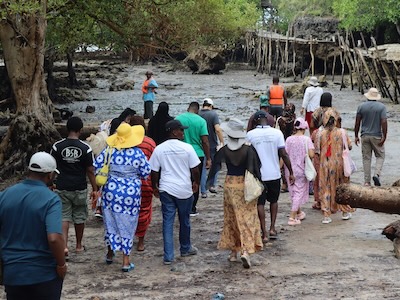
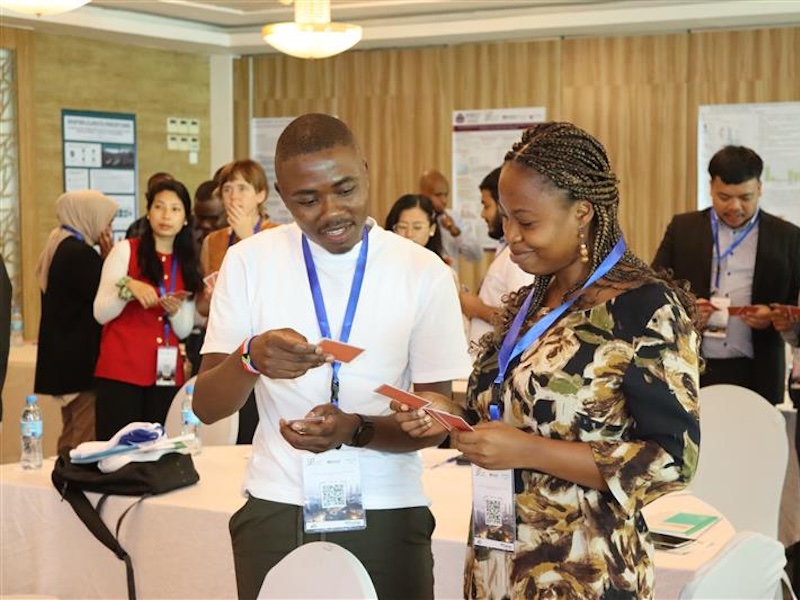
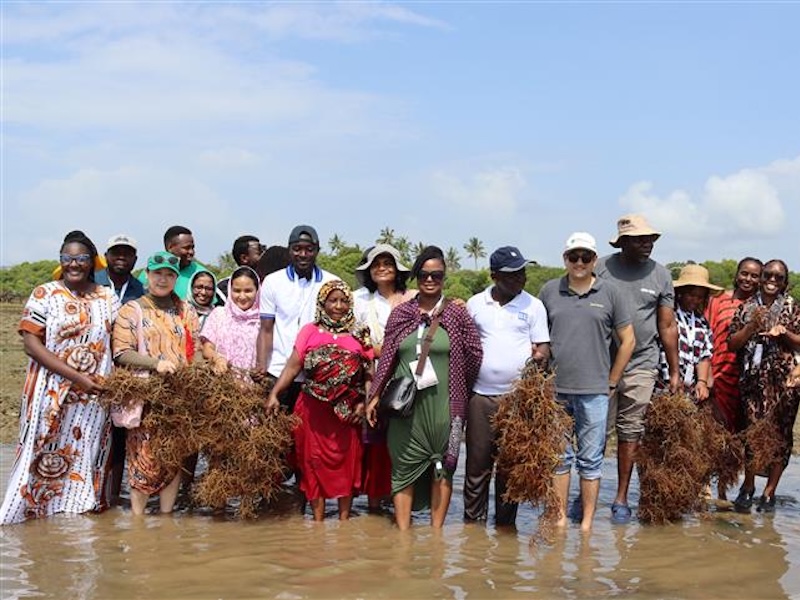
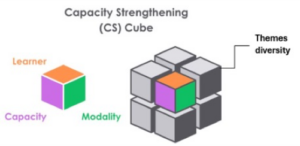 The Hub approaches capacity strengthening through a variety of means and modalities. In the last three years, we have co-designed and delivered tailored workshops, for example on knowledge brokering, gender equality and inclusion (GEI) or communication and dissemination. To support early- and mid-career colleagues, the Hub organised a seasonal school to offer an immersive, experiential learning environment to strengthen a variety of fundamental capacities around critical thinking in climate adaptation research. Depending on the intended learning objective (i.e. capacity to be strengthened) as well as the learning group, the Hub chooses a suitable modality (e.g. in-person, virtual, pre- or post-engagements). To ease the conceptualisation of activities, PlanAdapt is referring to the CS Cube.
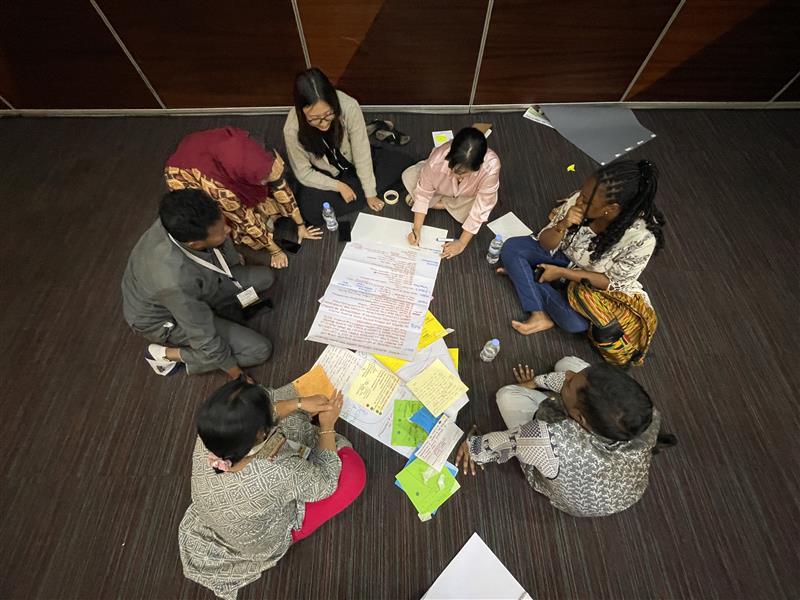
The Hub not only engages in building skills but also fostering peer-learning and collaboration. It conducted several virtual peer learning sessions, for example on co-creation labs and stakeholder engagement. These relational learning spaces allow teams to engage in collective problem-solving and sharing insights in an environment that cultivates trust and relationships.
Our Vision: Innovation and Learning for New Mindsets, Adaptive Systems and Societal Change
PlanAdapt does not only want to strengthen capacities, but spark innovation and learning. One vehicle is the Responsive Fund, designed to support experimentation and context-driven capacity strengthening across CLARE. It supports 7 ideas, ranging from eco-feminist leadership approaches to novel vulnerability assessment tools (see the IntegrateAdapt project and Benin-Health Hackathon). Through dedicated design support calls, PlanAdapt has supported teams to refine their CS design, articulating which specific capacities they want to strengthen, their learner groups and consideration around appropriate modalities. To enhance reflection and learning, recipients are encouraged to engage deeply with MEL of CS, which goes beyond the counting of participants. To understand if capacities are really being strengthened, we must track changes in behaviours, relationships, and organisational practices, depending on the objectives of the CS.
As the Hub moves into its last year of the current programme, it pays particular attention to captures and enable learning for a diverse learner group. Four learning areas have been identified: (i) climate adaptation research-specific skills and competencies; (ii) impact pathways along the research-to-impact chain; (iii) modalities for enhancing CS in the context of CCA research as well as (iv) GEI for CCA research.
What’s Next?
In the last year of our current programme cycle, the Hub is deepening its focus on supporting CLARE colleagues in strengthening capacities to enhance their research impact including dissemination of findings or influencing relevant policies. This will be done through successful proven workshop formats and skill trainings. Further, the Hub will continue supporting peer learning formats, offering flexible and trusted spaces to share experiences and research outcomes across CLARE.
In addition, the Hub focuses on learning and making connections across CLARE. On the long-term we prioritise the following:
- Sustainability of outcomes: thinking beyond ‘one-off’ trainings, we emphasize and support approaches that put long-term capacity strengthening at its core; whether it’s through Fellowships; consecutive engagements and applied practice.
- Enhancing institutional capacities: project cycles end – individual capacities move. We want to support approaches that foster institutional capacities, for example, through initiatives such as CO-CAT and BAOBAB, which focus on embedding skills, processes, and ways of working within organisations and networks, rather than relying solely on individual champions.
- Strengthening adaptation and resilience-specific capacities: particularly in view of skills, capabilities, competencies of individuals, institutions and systems that help advance policies, investments and behaviour change towards a climate-resilient, inclusive and more equitable societies and economies.
We believe in the power of collective learning, inclusive research practice, and equitable collaboration. As climate risks intensify, strengthening capacities for adaptation action across individuals, organisations, and systems becomes not just beneficial, but essential. Through its work, the Hub is helping to build an adaptation research ecosystem that is more connected, more equitable, and more capable of driving meaningful change in Africa and Asia.
Please get in touch with us engage@plan-adapt.org if you’re interested to collaborate in this space.