
COP31 – What Has It Delivered for Climate Adaptation and Loss and Damage?
Climate adaptation and loss and damage: Incremental progress, persistent financing gaps, and a widening divide between international commitments and effective implementation.
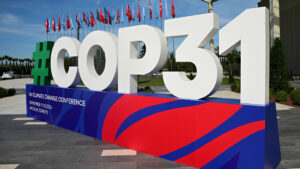 The 31st UN Climate Change Conference (COP31), held in Antalya, Türkiye, from 9 to 22 November 2026, ended without an overarching political agreement. After two days of overtime negotiations, countries failed to reach consensus on the proposed Antalya Pact, exposing persistent divisions over fossil fuels, climate finance, and the responsibilities of developed and developing countries.
For climate adaptation and loss and damage, the outcome presents a familiar picture: incremental institutional progress, but insufficient political determination and financial commitments to address accelerating climate impacts.
A year earlier, COP30 in Belém had been promoted as the Implementation COP and Adaptation COP. As discussed in PlanAdapt’s assessment of COP30, it delivered important frameworks and political signals but fell short on financing and implementation.
COP31 was expected to build on these achievements. Instead, Antalya demonstrated how difficult it remains to translate international commitments into tangible progress.
Yet the failure to adopt the Antalya Pact does not mean that everything failed. Countries adopted separate decisions on adaptation, the Adaptation Fund, loss and damage, and just transition.
The more fundamental question is whether these outcomes will make a meaningful difference for people and economies already experiencing increasingly severe climate impacts.
Political Deadlock: A Setback for Climate Adaptation
COP31 introduced an unusual leadership arrangement, with Türkiye holding the COP Presidency and Australia presiding over negotiations.
Despite this collaborative arrangement, fundamental disagreements persisted.
The European Union and several climate-vulnerable countries rejected the proposed Antalya Pact, arguing that it failed to adequately address the transition away from fossil fuels and offered insufficient financial support for developing countries.
Other negotiating groups, including the African Group, expressed reservations but were prepared to accept the compromise.
Ultimately, the negotiations ended without consensus on the main political declaration. Several other proposed decisions also failed.
As documented by the Earth Negotiations Bulletin’s COP31 reporting, individual decisions nevertheless advanced important elements of international climate cooperation.
For adaptation, the deadlock is particularly consequential. Delays in reducing greenhouse gas emissions increase future climate risks, adaptation costs, and the likelihood that communities will face impacts beyond their capacity to adapt.
Failure to mitigate climate change today means greater adaptation costs and more unavoidable loss and damage tomorrow.
Global Goal on Adaptation: Progress in Measurement, but What Are We Measuring?
One of the main expectations for COP31 concerned the further development of the Global Goal on Adaptation (GGA).
At COP30, countries adopted 59 indicators to assess global adaptation progress, alongside the two-year Belém–Addis Vision process to refine their technical quality and practical application.
COP31 adopted a separate decision on the GGA, maintaining this process despite the broader political deadlock.
This represents welcome continuity. However, important questions remain about the indicators’ relevance, applicability across different national contexts, and ability to capture meaningful adaptation outcomes.
Measuring adaptation is fundamentally different from measuring emissions reductions.
Adaptation success depends on local climate risks, socioeconomic conditions, institutional capacities, and the effectiveness of decisions taken across sectors and timescales.
Indicators that primarily capture the existence of policies, strategies, or institutional arrangements risk creating an illusion of progress.
Having an adaptation plan does not necessarily mean that adaptation is happening. And implementing adaptation activities does not automatically mean that vulnerability is being reduced.
The challenge is therefore not simply to measure adaptation efforts but to assess whether they genuinely strengthen resilience and improve outcomes for people and ecosystems.
The official UNFCCC COP31 decisions provide the basis for continued technical work. Their value, however, will depend on whether global monitoring frameworks can be connected to locally relevant evidence and practical decision-making.
Adaptation Finance: Still Too Little, Too Uncertain
Adaptation finance remained among the most contentious issues in Antalya.
At COP30, governments called for efforts to triple adaptation finance by 2035. Although politically significant, this commitment lacked a clearly defined baseline and binding financial obligations.
COP31 failed to resolve these shortcomings.
The proposed Antalya Pact included provisions addressing adaptation finance and a possible roadmap towards COP32. However, these provisions were part of the overarching text that was ultimately not adopted.
Consequently, they cannot be counted as agreed COP31 outcomes.
Meanwhile, the scale of the challenge continues to grow. According to the UN Environment Programme’s Adaptation Gap Reports, adaptation financing needs in developing countries substantially exceed current international public finance flows.
But the challenge extends beyond funding volumes.
Many adaptation investments generate substantial public benefits without producing sufficient direct financial returns. Others offer commercial opportunities but face high upfront costs, uncertain demand, fragmented markets, and limited access to suitable financing instruments.
Closing the adaptation finance gap therefore requires better alignment between adaptation needs, investment opportunities, financial instruments, and implementation capacities.
Public and grant-based finance will remain indispensable. At the same time, innovative financing mechanisms, including appropriately structured blended finance, can help mobilise private investment in adaptation-related products, services, and infrastructure.
Recent work by Climate-KIC, UNIDO, and PlanAdapt on adaptation entrepreneurship ecosystems highlights the importance of strengthening the intermediaries, markets, and support systems through which adaptation innovations become viable and scalable.
The adaptation finance challenge is not only about mobilising more money. It is also about making adaptation more financeable, investable, and implementable—without neglecting needs that cannot generate commercial returns.
Adaptation Fund: Institutional Progress Despite the Deadlock
One of the more tangible outcomes of COP31 concerned the Adaptation Fund.
Countries adopted decisions relating to the Fund’s institutional arrangements under the Paris Agreement, including its transition towards exclusively serving the Agreement.
The arrangements also provide for potential financing through the Paris Agreement’s Article 6 carbon market mechanisms, including a mandatory share of proceeds from the Article 6.4 mechanism.
This represents institutional progress, although the scale and predictability of future revenues remain uncertain.
For developing countries, the more important question is whether such arrangements will translate into accessible, predictable, and sufficiently large funding flows.
National Adaptation Planning: Moving Beyond Documents
COP30 concluded a long-running assessment of National Adaptation Plan (NAP) processes, recognising progress while highlighting persistent financing and implementation challenges.
COP31 did not fundamentally change this picture.
Many countries have invested considerable resources in vulnerability assessments, adaptation strategies, and planning frameworks. Yet implementation remains constrained by institutional fragmentation, insufficient financing, and limited technical and organisational capacities.
Effective adaptation requires integrating climate considerations into everyday decisions on infrastructure, urban development, agricultural investments, financial services, and business operations.
This raises questions about the capabilities of the people and organisations expected to implement adaptation.
Are we investing enough in the competencies, institutional arrangements, and decision-making processes needed to turn climate knowledge into effective action?
Without addressing these questions, further improvements in adaptation planning risk producing better documents rather than better adaptation outcomes.
Loss and Damage: Institutions Advance, but Financial Support Remains Inadequate
Loss and damage remained a central concern for climate-vulnerable countries experiencing impacts that cannot be fully avoided through mitigation or adaptation.
The Fund for Responding to Loss and Damage (FRLD), established at COP27 and operationalised at COP28, represents an important achievement in international climate governance.
At COP30, the Fund launched its initial call for funding requests under the Barbados Implementation Modalities, marking a transition towards financing activities.
COP31 adopted further decisions concerning the Fund and its governance, alongside decisions relating to the Warsaw International Mechanism and the Santiago Network, which support international cooperation and technical assistance.
These outcomes demonstrate that the institutional architecture continues to develop, even without an overarching political agreement.
However, they do not constitute a breakthrough in financing.
Available resources remain far below estimated needs, while affected communities face increasingly severe economic and non-economic losses, including destroyed infrastructure, displacement, ecosystem degradation, and the loss of cultural heritage and livelihoods.
The fundamental questions remain unresolved.
How can sufficient resources be mobilised? How can funding reach affected communities quickly? And how can financial mechanisms respond to losses that cannot easily be quantified or compensated?
Accessibility is particularly important. Complex procedures and demanding reporting requirements can prevent resources from reaching countries and local organisations with limited institutional capacities.
The credibility of the loss and damage architecture will ultimately depend less on the sophistication of its institutions than on whether it delivers meaningful support to vulnerable communities.
Beyond Negotiations: Where Will Effective Adaptation Actually Happen?
One lesson from COP31 is becoming increasingly difficult to ignore: international negotiations alone will not deliver adaptation at the necessary scale.
While multilateral agreements establish important political frameworks, adaptation is ultimately implemented by governments, businesses, civil society organisations, financial institutions, and communities.
COP31’s Action Agenda included voluntary initiatives addressing resilience, investment, and other climate priorities. Their effectiveness, however, depends on whether they mobilise additional resources and generate measurable improvements.
The more fundamental challenge is to connect climate knowledge, financing, innovation, and implementation capacities.
This requires moving beyond individual projects towards strengthening the institutions, markets, and professional practices through which adaptation decisions are made.
It also requires a broader understanding of innovation.
Technological solutions are important, but organisational innovation, new financing arrangements, institutional collaboration, locally driven approaches, and improved decision-making processes can be equally transformative.
Artificial intelligence may increasingly improve climate risk analysis, knowledge accessibility, and decision support. Yet better information does not automatically lead to better decisions.
The critical question is not simply how much climate knowledge or technology we can generate, but how effectively we translate it into decisions, investments, and actions that reduce climate risks.
Conclusions: From Antalya to Addis Ababa
COP30 delivered frameworks and political signals but insufficient financing and enforceable commitments.
COP31 was expected to help close this gap. Instead, Antalya exposed how fragile international consensus has become.
The failure to adopt the Antalya Pact represents a significant political setback. Yet individual decisions on the Global Goal on Adaptation, the Adaptation Fund, and loss and damage demonstrate that multilateral cooperation has not come to a standstill.
For adaptation, however, the overall assessment remains sobering.
Progress in developing indicators, institutional arrangements, and financing mechanisms continues to outpace progress in mobilising resources and strengthening implementation capacities.
Adaptation finance remains inadequate and insufficiently predictable. Loss and damage institutions are advancing, but available resources remain far below actual needs. And continued fossil fuel dependence threatens to make adaptation increasingly expensive and, in some cases, impossible.
Perhaps the greatest weakness of international adaptation negotiations is that we have become increasingly sophisticated at defining, planning, and measuring adaptation—without becoming equally effective at implementing it.
COP32, scheduled for Addis Ababa, Ethiopia, in 2027, offers an important opportunity to advance the adaptation agenda, particularly from the perspective of African countries and other climate-vulnerable regions.
The continuation of the Belém–Addis Vision process provides an opportunity to strengthen adaptation indicators and their practical relevance.
Equally important will be progress in mobilising adaptation finance, operationalising loss and damage support, and integrating climate resilience into public and private investment decisions.
However, progress cannot wait for another annual negotiation cycle.
Governments, businesses, research institutions, financial actors, and civil society organisations need to strengthen the connections between climate knowledge, innovation, financing, and implementation.
This includes investing in adaptation competencies, supporting innovation ecosystems, developing suitable financing mechanisms, and strengthening institutions’ ability to make effective decisions under uncertainty.
The question for COP32 should therefore not simply be whether countries can agree on more ambitious language. It should be whether international climate cooperation can finally move beyond negotiating adaptation towards enabling it at the scale, speed, and quality that the climate crisis demands.