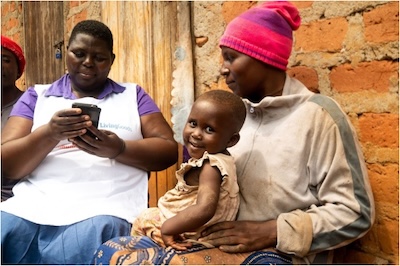
Inside the CLARE CS Hub

The Capacity Strengthening (CS) Hub is part of the Climate Adaptation and Resilience (CLARE) Programme, co-funded by the FCDO and IDRC, which aims to support socially inclusive and sustainable actions that strengthen resilience to climate change and natural hazards in Africa and Asia-Pacific. Inside the CLARE Capacity Strengthening (CS) Hub What Role Do Learning & Research Play in Building Read More

COP30 – What Has It Delivered for Climate Adaptation and Loss Damage?

COP30 – What Has It Delivered for Climate Adaptation and Loss and Damage? With monikers such as the ‘Forest COP’ (after the previous two ‘Oil COs’), the ‘Peoples’ COP’, the ‘Implementation COP’ and the ‘Adaptation COP’, expectations that COP 30 in Belem would further the implementation of global climate action were high. However, in reality, Read More

How Do We Know Whether Our Capacity Strengthening Efforts Are Working?

How Do We Know Whether Our Capacity Strengthening Efforts Are Working? A practical framework for matching your monitoring, evaluation and learning approach to your modality for capacity strengthening Consider a common scenario: You have just completed a three-day training workshop on climate vulnerability assessments. Participant feedback is overwhelmingly positive – the facilitators were excellent, and Read More

What Does it Take to Catalyze Transformational Adaptation in Asia and the Pacific?

What Does it Take to Catalyze Transformational Adaptation in Asia and the Pacific? Reflections from the 9th Asia-Pacific Climate Change Adaptation Forum How to catalyze transformational adaptation was the central, urgent question echoing through the 9th Asia-Pacific Climate Change Adaptation (APAN) Forum in Bangkok. The theme, ‘Resilience for All: Catalyzing Transformational Adaptation’, made it clear: Read More

Managing Indoor Heat Adaptation

COOL4ALL: An Online Platform for Indoor Heat Adaptation Urban Heat as a Growing Challenge Extreme heat is becoming one of the most urgent urban challenges, disproportionately affecting vulnerable populations with significant social, economic and health implications. Today, over 200 million people live in cities experiencing extreme heat, and by 2050, this number is projected to Read More