
Integrating Climate Adaptation into Processes and Decision-Making
At PlanAdapt, we help organisations in the public sector, private sector, and civil society move from climate awareness to climate-resilient practice. Rather than treating climate adaptation as an isolated activity or an add-on project, we work with institutions to integrate adaptation considerations directly into their existing strategies, workflows, and decision-making processes. This means strengthening how organisations plan, prioritise, allocate resources, and take long-term decisions (Nalau 2024, Amanuma et al. 2024, Siders & Pierce 2021, Stern et al. 2021) in ways that recognise climate risks and opportunities.
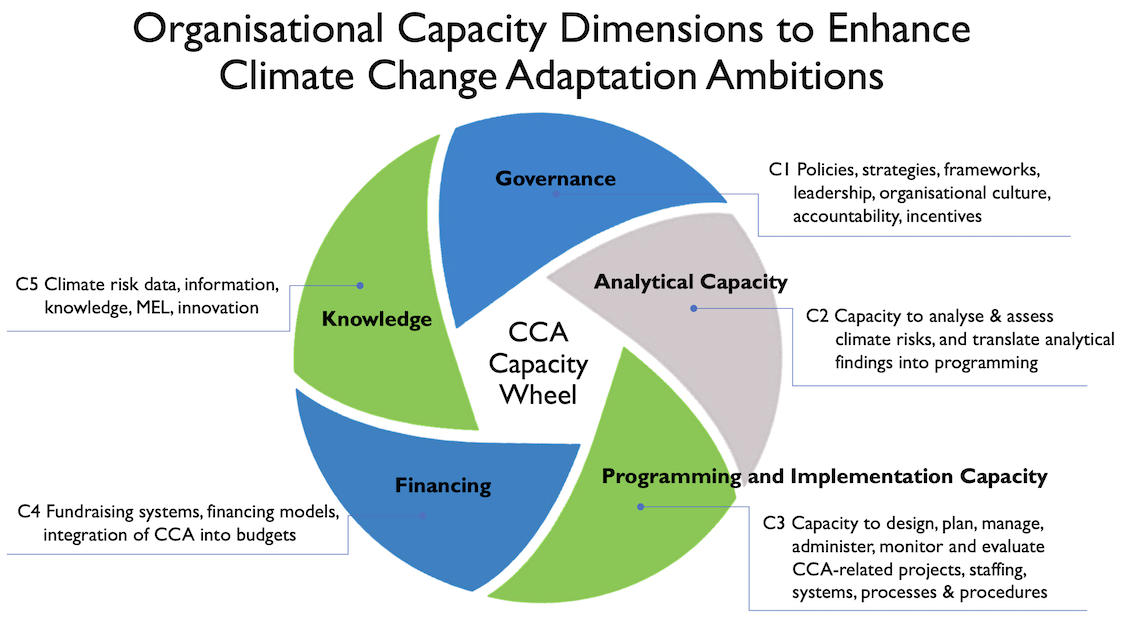
Our work begins with understanding how an organisation currently operates: where decisions are made, who is involved, what incentives shape choices (Carr & Nalau 2023), and how information flows. We then collaborate with teams to identify the moments in their processes where climate adaptation matters most. From there, we support strategy development, design more climate-responsive processes, and help create organisational cultures and practices that make climate adaptation a routine part of doing business.
Decision-making support for climate adaptation involves frameworks (Bouska et al. 2025, xx) tools, and platforms that help users navigate uncertainty and plan actions, using methods like risk assessment, cost-benefit analysis, adaptation pathways, and scenario planning, integrating scientific data with stakeholder input to develop robust strategies for managing climate impacts in sectors from agriculture to infrastructure. These systems translate complex climate data into actionable insights for policymakers, businesses, and communities, focusing on building resilience through iterative learning and monitoring.
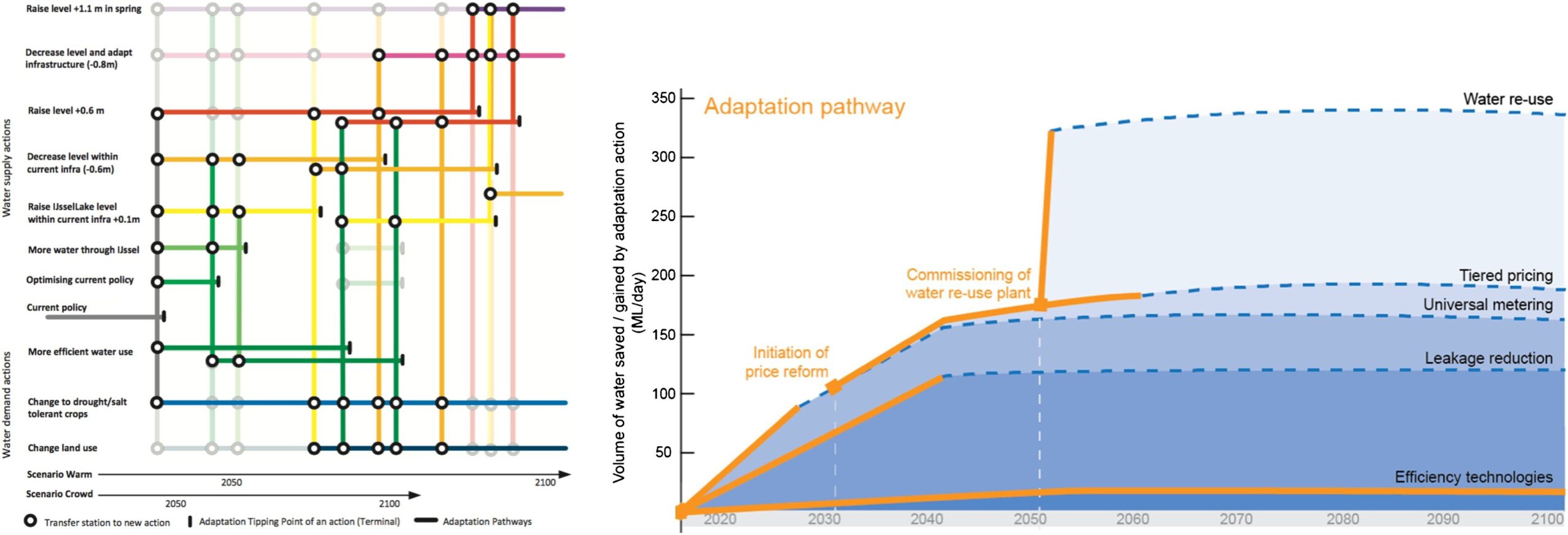
There are increasing numbers of approaches in this field of work, such as adaptation pathways (Sparkes et al. 2023, Werners et al. 2021), ...
In the public sector, this may mean supporting government agencies or city administrations to embed climate risk and resilience thinking into policy development, planning cycles (Ledda et al. 2024, Liss et al. 2025), budgeting procedures, infrastructure appraisal systems, and monitoring frameworks. For example, we help ministries incorporate climate criteria into investment decisions; we support municipalities to design participatory planning processes that integrate local knowledge about changing climatic conditions; and we work with regulatory bodies to include adaptation considerations in approval processes and standards. Furthermore, we help municipalities co-design workflows that ensure climate data and projections inform cross-departmental planning and investment decisions, strengthening the use of climate information strategically rather than sporadically (see also, journal Climate Services). By shaping these institutional processes, public authorities become better equipped to steer development pathways that remain viable under future climate uncertainty.
In the private sector, we support companies and financial institutions to align their strategies and internal decision-making with climate-related risks and responsibilities. This can include integrating climate resilience considerations into corporate risk management processes, supply chain management, ESG frameworks, sustainability strategies, or long-term capital planning. For example, we work with businesses to assess how climate variability and extremes may affect operations, value chains, or customer groups, and we help them redesign decision workflows so that climate information informs everyday choices — from investment and procurement to product development and corporate strategy. The result is not only reduced vulnerability but also enhanced competitiveness, innovation, and accountability.
In the NGO and civil society sector, we help organisations integrate adaptation into programme design, implementation methodologies, and organisational learning systems. This may include facilitating strategy development processes that shift programmes from reactive response to anticipatory resilience building, or supporting organisations to incorporate climate analysis into community development plans, humanitarian programming, and advocacy work. We also help NGOs create more reflective, learning-oriented environments, where teams continually adapt their approaches based on changing climate realities and lessons from practice.
Across all these settings, our support combines design, facilitation, and technical expertise:
- we design and facilitate collaborative processes that bring together leadership teams, technical experts, practitioners, and affected communities to jointly shape adaptation strategies and decision frameworks;
- we provide tools, methods, and decision support to ensure that climate information is meaningful and usable; and
- we accompany organisations beyond planning phases, helping them operationalise newly designed processes, develop guidance materials, and strengthen the skills and confidence of staff so that climate adaptation integration is sustained over time.
By embedding climate adaptation into the core processes that guide how organisations think, decide, and act, we help create systems that are more resilient, future-ready, and responsive to uncertainty. This leads to better decisions, smarter resource allocation, stronger institutions, and development pathways that remain viable and just in a changing climate.
Read more about previous PlanAdapt initiatives and projects in this area of work:
- Climate Adaptation at Scale – Is Your Organisation Ready? – Which Organisational Capacities Are Relevant?
- Supporting the Development of Lebanon's National Adaptation Plan Process
- Scaling Impact: Evaluation Scalability in the Adaptation Fund's Portfolio