
COP30 – What Has It Delivered for Climate Adaptation and Loss and Damage?
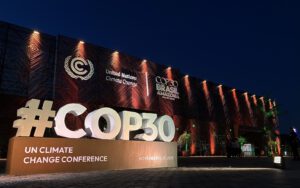
With monikers such as the ‘Forest COP’ (after the previous two ‘Oil COs’), the ‘Peoples’ COP’, the ‘Implementation COP’ and the ‘Adaptation COP’, expectations that COP 30 in Belem would further the implementation of global climate action were high. However, in reality, it proved to be divisive, and the COP closed with a final package from the Brazilian presidency called the global mutirão — a bundle of voluntary measures intended to accelerate implementation – which experts found underwhelming and disappointing (for a detailed description of the outcomes, read this report, and also SEI and others 2025).
The package included a voluntary roadmap to transition away from fossil fuels, a headline goal to triple adaptation finance, new measures to track adaptation efforts, and a proposed mechanism to support a just transition. These outcomes were framed as practical steps toward turning past commitments into action, but many of them remain voluntary or sit outside formal UNFCCC decision text.
While Belem was chosen for the symbolic power of holding a COP in the Amazon forest, the city’s own vulnerabilities, from flooding and poor sanitation in low‑income areas to projected extreme heat days, underscored the urgency of adaptation. At the same time, the summit’s environmental footprint and the practical difficulties of staging the talks in a remote region highlighted tensions between symbolism and sustainable, inclusive practice. Notably, a fire at the venue forced a large evacuation and delayed proceedings. Logistical problems were widespread: accommodation shortages, expensive emergency arrangements such as docking cruise ships for delegates, and infrastructure failures in the host city exposed a mismatch between the summit’s symbolic location in the Amazon and the practical demands of hosting a global conference (see this feature in Mongabay).
Underrepresented Voices from the Global South and Indigenous Communities
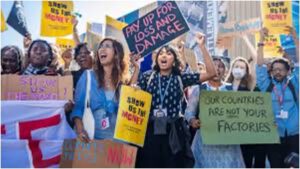
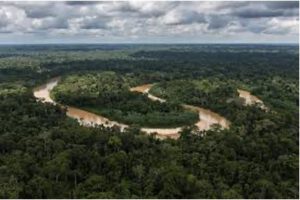 Indigenous peoples and frontline communities were highly visible in Belém and mobilised at an unprecedented scale. Over 5,000 Indigenous participants attended, staging large protests and keeping frontline perspectives in the public eye. Despite this presence, formal access remained limited: only a small fraction secured passes to the negotiating “blue zone,” and Indigenous delegates were largely excluded from closed‑door sessions and decision‑making, reinforcing long‑standing barriers to meaningful participation.
The summit’s political dynamics reflected deep global divisions. Fossil fuel interests and oil‑producing states exerted strong influence inside negotiating rooms, while the absence of an official US delegation reshaped the balance of power and allowed other actors, notably China, to play a more prominent role. These geopolitical shifts helped produce compromises that favoured voluntary roadmaps and non‑binding mechanisms rather than legally enforceable commitments.
Further, accessibility and equity issues were stark. Delegates and civil society actors from the Global South faced visa and registration hurdles, with many reporting late or missing invitations and e‑visa problems. The imbalance in representation was striking: well‑resourced industry delegations outnumbered frontline and civil society participants in negotiating spaces, undermining the legitimacy of outcomes and risking solutions that do not reflect local needs or Indigenous knowledge.
What’s been the Progress on Climate Adaptation?
While COP30 was touted to move forward the adaptation agenda significantly, the final outcome was still inadequate, according to several experts. Still, it produced some important process advances. These are explained further below.
Global Goal on Adaptation: Indicators without Financial Backing
 Negotiations regarding the adoption of the indicators for the Global Goal on Adaptation revealed sharp divisions. The African group resisted immediate adoption, citing sovereignty concerns and lack of finance, while Latin American countries pressed for urgency. Developed countries sought indicators linked to domestic resource mobilisation, which many developing nations opposed.
The final compromise annexed 59 indicators, clarified they did not create new financial obligations, and launched a two‑year “Belém‑Addis vision” to refine them further. A placeholder for an adaptation finance goal was retained, though the broader text weakened ambition by merely calling for efforts to triple finance by 2030. The resolution was adopted but met with mixed reactions. Without predictable, grant‑based finance, the GGA risks becoming an empty tracking mechanism.
Adaptation finance: Symbolic but not Committed
Adaptation finance was one of the most contentious issues. Developing blocs – LDCs, AOSIS, the African group, and Grupo Sur – demanded a target to triple finance by 2030, citing escalating climate impacts. Developed countries, particularly in the EU and EIG, resisted, warning it could reopen broader finance negotiations.
The final mutirão decision called for tripling finance only by 2035, without specifying a baseline. Current flows of $26bn fall far short of the $300bn needed annually, leaving vulnerable nations exposed. While some argued private capital could play a greater role, evidence of large‑scale mobilisation remains limited. Adaptation continues to rely heavily on public, grant‑based finance.
Loss and Damage: Advancement without Accountability
Negotiations on loss and damage were slow, though parties managed to conclude texts stalled for over a year (read more on Loss and Damage negotiations here). The UN Loss and Damage Fund launched its first call for requests under the “Barbados implementation modalities.” Developed countries have pledged around $790m, but less than half has been delivered, and the initial $250m distribution is a fraction of annual needs in the hundreds of billions.
The final resolution was stripped of references to accountability or reparations. Kenya held up progress, insisting on cost‑effectiveness language before agreeing. By the close of COP30, negotiators had spent more than 80 hours on the review since 2024, a pace widely criticised as inadequate given the urgency of climate impacts. Institutional frameworks advanced, but without substantial finance they remain symbolic.
National Adaptation Plan Processes: A Hopeful Step
After two years of talks, countries adopted the decision on the NAP assessment. The outcome recognised progress by developing countries and highlighted the importance of Indigenous knowledge, gender‑responsive approaches, and nature‑based solutions.
However, it offered little guidance on scaling up support. Key elements such as mainstreaming adaptation across national policies and coherence with biodiversity strategies were missing. The adoption marked progress but left unresolved how countries will secure resources and policy integration to turn plans into action.
Just Transition Work Programme: An Important Victory
Negotiations centred on whether to establish a mechanism or a lighter action plan. Developing countries pushed for a mechanism to provide technical assistance and partnerships, while some developed countries opposed, citing duplication and costs. The EU suggested an action plan as a less ambitious alternative.
By the end of the summit, negotiators converged on a mechanism, which was adopted and greeted with applause. The outcome was hailed as a victory, particularly for including progressive language on labour rights, human rights, environmental rights, and participation of marginalised groups. However, references to fossil fuel phase‑out, transition fuels, trade measures, and critical minerals were excluded, reflecting ongoing divisions.
Gender Action Plan: A Fragile Consensus
Negotiations on the GAP were marked by disputes over definitions. Some countries sought to restrict gender to binary terms, but these proposals were rejected. Drafts contained hundreds of bracketed disagreements over reproductive rights and women’s participation, underscoring how contested the issue remains.
Despite tensions, parties adopted a new GAP with five priority areas: capacity‑building, gender balance and leadership, coherence across UN processes, gender‑responsive implementation, and monitoring. The outcome reaffirmed gender equality as central to effective climate action, even as consensus remains fragile.
Conclusions
 COP30 delivered frameworks and signals but little binding finance or enforceable commitments. Adaptation, loss and damage, and just transition advanced procedurally, yet the absence of resources leaves vulnerable communities exposed. The summit highlighted the gulf between oil‑producing states and developed countries, especially in the Global North, and climate‑vulnerable nations, and between civil society’s demands and governments’ compromises. Indigenous groups and grassroots movements brought powerful voices, but political will from wealthier nations fell short. COP30 leaves us with aspirations, but without the resources to make them real.
What’s Next?
COP31 in Türkiye, with Australia presiding over negotiations, will test whether shared leadership can bridge divides. Brazil has pledged to advance deforestation and just transition roadmaps in the coming year, while COP32 in Ethiopia will mark the first summit led by a least developed country.
The real challenge lies in domestic implementation. Countries that endorsed the fossil fuel transition roadmap must now accelerate national action. Without finance, technology transfer, and political courage, the frameworks agreed in Belém risk becoming empty promises. COP31 must bridge the gap between ambition and delivery – ensuring that the transition is not only declared but resourced, equitable, and real.