
GEI Checklist For Designing and Delivering Capacity Strengthening Approaches
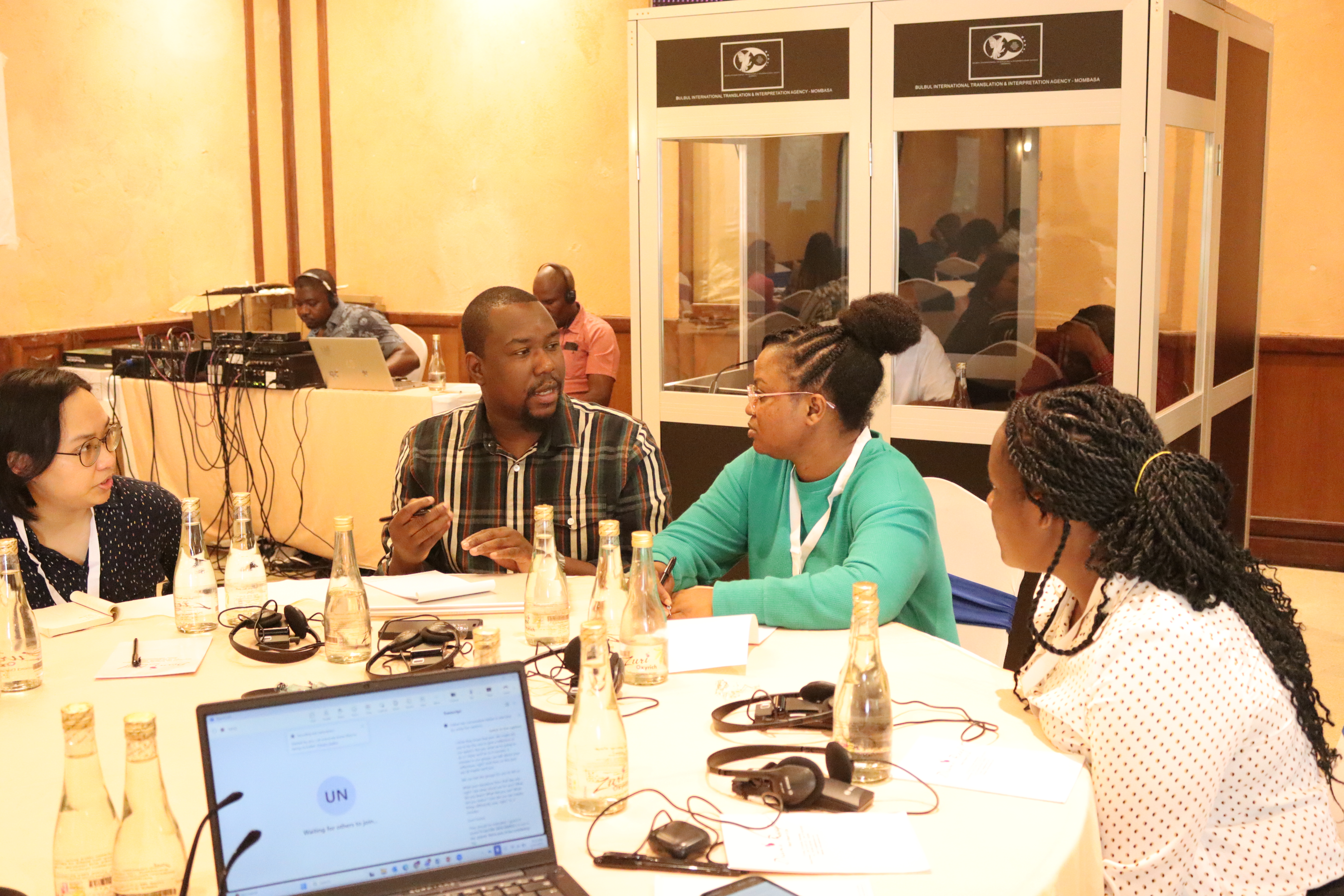
This checklist is meant to guide and support facilitators and organisers to design, deliver, and reflect on more gender - equitable and inclusive capacity strengthening approaches.
The checklist is NOT a compliance tool, it is meant to:
The checklist aims to help users reflect on:
Ultimately, the checklist helps answer the question:
How can capacity strengthening approaches be more gender - equitable and inclusive?
First identify what stage you are in:
Second, tick Yes or Not Sufficiently for each question
Third, after ticking all boxes:
Review all the "Not Sufficiently" responses (These highlight priority gaps. It is not a negative reflection).
Select 2-3 key areas to improve that align with your objectives.
Identify practical actions
Ask yourselves: What is one concrete thing we can do differently next time?
Review your "Yes" responses
Ask yourselves: What worked well? What should be replicated or strengthened?
Document key lessons
Ask yourselves: What will you do differently in your next capacity strengthening activity?
Not all questions will apply to every context. You may skip any questions that are not relevant to your specific activity (e.g., hybrid access, interpretation, or research components). Focus on what is most meaningful for your context.
Adapt for in-person and virtual settings. Consider how inclusion looks different depending on the format:
Remember to set clear housekeeping rules at the beginning of the sessions for participants to be more sensitive and inclusive.
Case studies consider local contexts or reflect the contexts of the participants.
Learning questions mention specific groups, local climate risks, everyday impacts and experiences.
Child care is important for participants, particularly care givers. If the target group includes care givers, ensure that trainings are planned to end early, giving participants time to collect their children from school or be at home to prepare for their return.
For hearing impairment, make sure there is a sign language interpreter and provide written materials and summaries. For physically challenged participants, make sure there is a ramp or lift if the meeting venue is not on the ground level.
Did this learning activity strengthen equitable decision-making or unintentionally reproduce exclusions?
Formulate your strategy based on areas marked "Not sufficiently". Address resource requirements and set target deadlines.
| Identified Gap / Area to Improve | Action Steps (What will we do differently?) | Target Date | Actions |
|---|
This checklist is informed by practical tools and frameworks for integrating Gender Equality and Inclusion (GEI) into climate adaptation and resilience work. Use the resources below for deeper guidance and application.
NDC Partnership – GESI Toolkit for Project Preparation
Climate and Development Knowledge Network (CDKN) – GESI Training Manual
EngenderHealth – Gender, Youth and Social Inclusion (GYSI) Tools
Cooperation in International Waters in Africa (CIWA) – GESI Framework
UN Women – GESI Checklists and Guidance
Harvard Gender Analysis Framework
This checklist was authored by the Capacity Strengthening Hub (Alannah Hofemeier & Lisa Manya) in collaboration with WOSFER (Florence Kyoheirwe Muhanguzi & Peruth Naturinda) and AWARD (Dorine Odongo & Pauline Bomett).
This checklist has been endorsed by Swetha Thammadi, Lutfor Rahman, Lilian Adeogba and Vanesa Castan Broto.
CLARE is a flagship research programme on climate adaptation and resilience, funded mostly (about 90%) by UK Aid through the Foreign Commonwealth and Development Office (FCDO), and co-funded by the International Development Research Centre (IDRC), Canada. CLARE is bridging critical gaps between science and action by championing Southern leadership to enable socially inclusive and sustainable action to build resilience to climate change and natural hazards. The views expressed herein do not necessarily represent those of the UK government, IDRC or its Board of Governors. Learn more about CLARE: www.clareprogramme.org